Welcome to the Conscious Cultural Evolution Website!
Want to see the Culture Change Constructive Panic Slideshow?
You can download it
here. (Windows Media file).
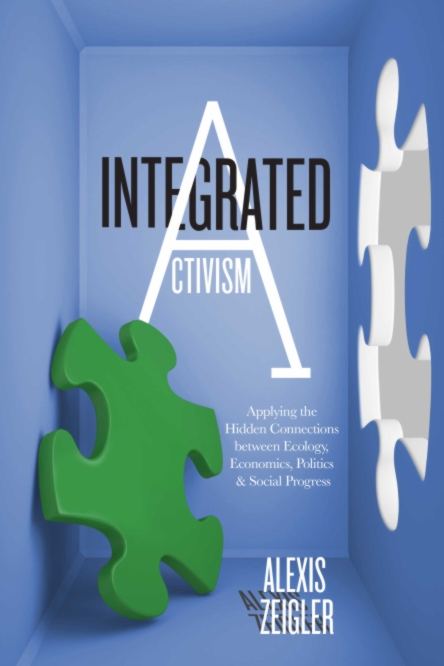
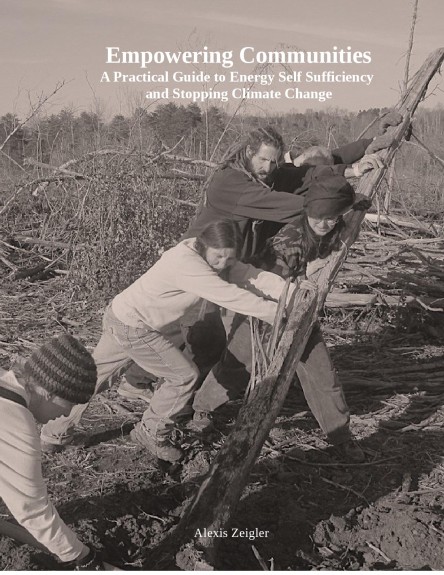
Alexis also has a NEW book:
Beyond Greenhype, Real Solutions for Global Warming
This is the cover of Alexis Zeigler's book, Culture Change, Civil Liberty,
Peak Oil, and the End of Empire.
You can also send $10 check or money order to:
From the back cover of Culture Change:
While we are daily witness to the powers of progress manifest in the extraordinary mechanical technologies we have developed in the industrial age, we remain woefully unaware of the most basic causes of social change in our society. Our lack of social awareness does not result from the difficulty of understanding social problems, it results from the active repression of such awareness.
The political resistance movements that developed in the twentieth century were adapted to conditions of economic growth. When an economy is growing, petitioning through political and legal means to assure increasing access to rights and wealth for traditionally disenfranchised groups met with a measure of success, and that success was the foundation for further movement building. Those movements cannot, as they are currently structured, guide us through the coming age.
Many of the problems that we see as having purely political roots are strongly influenced by economic and ecological factors. Social issues that may seem far apart, such as ecological stress and women's rights for instance, have common roots. In the modern context, much of the political unraveling that we are witnessing can be understood in terms of the limitations of growth of modern industrialism.
The growth of fundamentalism and militarism, the decline of civil liberty and the environment, all of these problems are going to get worse if we do not find a new means to address them.
There are real solutions to these problems, but they are going to involve a quantum leap, both in thought and in action, beyond our current methods of political engagement. The solutions themselves are not even terribly difficult, they are simply well outside of our current range of vision and will.
Table of Contents
Culture Change: Civil Liberty, Peak Oil and the End of Empire by Alexis Zeigler is a book that is meant to change your life; no, the author aims higher than merely changing the lives of his readers, he aims to change the way society is structured and the way cultures evolve. Who knows? This book is powerful enough that it is possible it will someday change society, but it will certainly change reader’s lives; enter at your own risk.
If you decide to read Culture Change, you will get to experience the sublimely satisfying experience of having the content of thousands of books digested and explained to you in a way that feels comfortable and comprehensible. Mr. Zeigler has apparently read every book ever written. Culture Change ties together historical events and culture shifts that most people have never considered in the same thought: contraception and peak oil, the four food groups and Chinese immigration in the US in the 1880’s. Or witch hunts in Europe in the middle ages and the current booming prison population.
The contention in Culture Change that black men are in jail now due to a modern day witch-hunt initially sounded ludicrous to me. But Culture Change ties the pieces together in a crisp, readable fashion: “Consider for a moment who we normally blame for urban decay. A teenage drug dealer stands in the popular mind, like the witches of the inquisition, as the supernatural force that has destroyed urban neighborhoods. The reality is that urban poverty is planned, a means of keeping wages down and profits up.”
Witch hunting looms large in this slim volume, because, contrary to what you may have believed, witch hunts loom large in how a society keeps the rich on top: “Witch hunting will continue to be used against the lower class and disempowered ethnicity’s as a means of deflecting blame for economic deprivation.”
As the reader proceeds through Culture Change, there are many of these ‘aha! moments, when opaque, rarely thought about bits of history, suddenly all fit together. Not just history, Culture Change covers historical movements, not as a mere intellectual exercise, but to show how the forces that moved historical societies are the same tides that are moving societies today.
Culture Change has no specific political bias, The author views both left and right with equal disdain. Mr. Zeigler gallops across the political spectrum with the sword of an iconoclast, skewering the prescriptions of the right and left. By the end of this book, few liberal or conservative icons are left standing. But Culture Change, is more than merely a polemic about how doomed the world is; Culture Change ends with set of hopeful prescriptions for changes to our society for “devolving power away from transnational corporate oligarchy and into local communities, and evolving a sustainable and conscious culture based on locally accessible power.”
This book carries powerful and well-packaged ideas for conscious cultural evolution. Few readers will be blithe to do nothing after reading this book; it is a clarion call to action. In that regard, it is a dangerous book. Read it at your own risk: you have been warned.
Articles:
An article by Alexis Zeigler entitled Biofuel and the Rise of Nationalistic Environmentalism was recently published at The Oil Drum,
Reality Sandwich, and
The Energy Bulletin
Biofuels and the Rise of Nationalistic Environmentalism
Will Biofuels Trigger Genocide?
BioFuels in Ecological Perspective
Concious Cultural Evolution, A Primer
The Past and Future of Women's
Rights in America
Peak Oil, Biofuel and Culture Change
And Now For Something Completely Different -- Fruit Trees!
My second obsession is growing fruit. To aid others in similar pursuits, I have created:
Interviews, Audio and Video:
Listen to the audio of Alexis' traveling slideshow, Peak Oil, Biofuel, and Culture Change. (It's a little over an hour, in MP3 format.)
Links:
Intenional Communities, Fellowship for Inentional Communities
Conscious Culture Tour, updates from the road, Jan-March 2009
Chicago, January 22
The first stop was Chicago, Stone Soup Cooperative. I biked the nearly 10 miles across Chicago in frozen slush to get there, laden with all of my sundry equipment, food, bedding, books and whatnot. They have two houses and rent a third large building that used to be convent. Stone Soup seemed like a well-organized group, though they did make me appreciate the two rules of Woodfolk House in Charlottesville. Woodfolk has two rules, no damn television, and no television dammit. Stone Soup had a large TV in the living room of the house where I stayed, which was sad. But they treated me well, and put me up in a very comfortable room. Only a few people attended the talk there. We had a spirited discussion afterwards. Then back across the messy landscape of Chicago, and westward.
Kalispell and Whitefish, January 25
The U.S. is covered in white, an endless frozen landscape of a harsh winter, from east of Chicago nearly to the west coast. It varied in thickness across the midwest, some places the farm tractors and machinery were nearly buried. The deer collected on any open ground, or around hay feeders placed for the cattle. The animals are never as intimidated by the train as they are by cars and people, so you see a lot of them. A lot of medium sized brown birds, grouse or partridges or something like that, and the more distinct pheasants.
The train was 3 hours late coming into Whitefish. A friend of a friend picked me up after midnight, and took me to her house where she lives with her three children. We talked far later than we should have. The next morning we talked more, then went to the local unitarian church. There a very spirited crowd engaged me as I talked, and the event went well. That afternoon we did another event at the local Grange hall. Another spirited crowd, and an engaging discussion afterwards. Whitefish was a blast, socially and otherwise.
Portland, January 28
I spent most of a week in Portland. I did some visiting with some friends who in live in the area, and attempted to look at a famous fruit tree nursery near Portland. They wouldn't let us get near their plants because of “OSHA,” whatever that means. I biked around Portland quite a bit. It's a good city for that.
The event was organized by a local bookstore, and the local peak oil group. The crowd was sizable, over 50 people I would guess. The discussion and aftermath were a bit intense. An elderly man approached me, told me he was a career sociologist with a PhD, and that mine was the best presentation he had ever heard. Someone else invited me to speak on local access cable in Portland on the February 14th (which I will be doing, though I am not sure when the program will air). Someone else invited me to speak at a conference on the 16th, which I will also be doing. I met an old friend I had not see in years, and made a lot of contacts. That was a grand evening
Olympia, January 31st
I had never been to Olympia, so I was pleased to get a chance to see it. Patricia Paisley, daughter of Scott Paisley who runs Blue Wheel bikes in Charlottesville put me up a funky cooperative house where she lives. I did my show at Last Word Books, and small bookstore in downtown Olympia. I biked all over Olympia, and Evergreen College before the event. The attendance at the talk was moderate, but it was a very engaged crowd, and nearly everyone bought a book. The next morning I biked the 12 miles out to the train stop, took a 5 mile wrong turn, but made it in time, though with a bit more effort than I had anticipated.
Seattle, February 5th
I stayed in Seattle with an old friend from Twin Oaks. Seattle is always as a challenge for the non-auto driver. The bus system is extensive, but complex, and unmapped. You either know where you are going, or you are lost. I met up with Freedom, who used to live at Woodfolk House. She had just flow down from Anchorage, bicycle in tow. The day before the talk, Freedom and I were out biking, and came across a television crew. They filmed us approaching, and then asked if they could interview us. A cyclist had died on the spot a few hours earlier. We gave them an interview, which aired that night. I tried to put in a plug for better bicycle facilities. We talked to a driver who had been behind the cyclist who had gotten killed. As it was, there was a lot of murder and mahem in Seattle that day. Freedom saw the report on the news (I didn't), and they cut it down to almost nothing. I went back to the spot the next day where the cyclist had died, and piles of flowers and makeshift monument had been set up. He was a young man, Kevin Black, coming fast down a hill. A van in front of him made a fast U-turn, they collided, and the cyclist went under the wheels of the van. He died in the hospital shortly thereafter. Kind of intense and random to end up in the middle of that.
Freedom and I also hit the famous Seattle chocolate dumpster. Two hauls yielded about 30 pounds of free, organic, fair trade chocolate bars. Not bad. The talk went well. There was a good crowd, though not as large as Portland. They did buy a lot of books, and we hung out afterwards in a bar and talked for quite some time. I stayed in 3 different houses separated by about 50 miles in the time I was in Seattle. That is one big city, too big for me I think. The sustainability/ transition concept is alive and well, and various neighborhoods are organizing their own sustainability initiatives. One of the organizers of the Seattle Peak Oil Awareness group just quit a professional job to haul produce from small farmers to consumers in the Seattle area using nothing but sailboats. We talked about that late in the evening. They are trying to use no power at all, which means some rowing. That's dedication.
Each of these talks gives me a chance to guage the audience response, to think of new ways of approaching the issues. It is clear that some of it, the discussion of childhood development in particular, simply goes by so fast that it's hardly worth it. It's not clear to me if the information I am putting out about peak oil and global warming are new, or if people are already informed about that. The relation of ecology and politics is certainly new, and folks are engaged by that. I may reduce or eliminate some of the global warming/ peak oil discussion and refocus more on the ecological influence over politics, past and future. I will have some time in Eugene to consider that.
Conscious Culture Constructive Panic Road Tour
I am on the train from Portland down to Santa Cruz. The last update left off in Seattle. I went to Eugene after Seattle, and had a few down days of not doing much. Seems like my brain needs that every once in a while. I stayed with Jai, who used to live at Woodfolk House, and Gra, who is now her husband. They are both very generous people, and made me feel very welcome.
At Robert Bolman's invitation (he's a founder and owner of Maitreya ecovillage, similar situation to my circumstance at Woodfolk House) I attended the Eugene Permaculture Guild meeting on Monday evening, February 9. It was a charming group who talked a lot about kale. I met Nick, who is a local vegetable growing and research celebrity. We had a great conversation about vegetables and fruit trees, growing and maintaining select varieties.
On Tuesday February 10 at 4 PM, I did an interview at KLCC, the NPR station in Eugene. The interview was only about 20 minutes. I think I amuse interviewers generally. Asking me a question is like flicking a light switch. I just start talking and they get to sit there and watch. The interviewer asked me a couple of questions about peak oil, Barrack Obama, etc, but mostly I just picked up the ball and ran with it. I do not know if KLCC archives their shows. As soon as I am reconnected to the internet, I will investigate that. The receptionist commented to me as I was leaving the studio, “that's the best interview I have heard here in years. You don't pull any punches.” Always nice to be appreciated.
That evening, I conducted my show at the Maitreya event space. It was a good crowd, well versed on the issues. The discussion at the end went directly to the activist side of the question, which is understandable given the group. I also met several people who I have not seen in years, including Chris Roth who lived at Twin Oaks many years ago, and Mark Robinowitz who used to be a bike organizer in the D.C. area. I also sold a lot of books. The event was great.
On Thursday February 12, I did an interview with Sue Supriano. She worked for years with KPFA in Berkeley, and now runs her own website, suesupriano.com The interview we conducted should be on that site soon. Sue was very enthusiastic about what I have to say, and has been trying to bolster my efforts to get more attention when I arrive in the Oakland/ Berkeley area. It remains to be seen if there will be any fruits of that labor.
I had dinner and some time to connect with Robert Bolman, which was good. We have a lot in common. Apart from owning Maytreya (ecovillage in Eugene), he has also traveled with a slideshow about green building. We had a most engaging discussion about past and future political adventures. I also dropped by the Bike Friday factory while I was in Eugene. I am traveling with one of their folding bikes. I rode one of their newer inventions, and had a good conversation with the folks there.
The following weekend, I reversed track and went back to Portland. I went live on air on Portland Public Access TV at 4 PM Saturday. (The show supposed to be archived at http://m3houseorg.blip.tv/ within a few weeks, but every time I have tried to access that web site, I have gotten peculiar results.) The show got off to a peculiar start. We were supposed to have used a few slides as video support, and I had provided them well in advance. There was also supposed to be a 10 minute or so lead-in where I would not be involved at the beginning. I thought everything was set up, but at 3 minutes before we went live, I was informed that we did not have the slides. So I went to a producers computer, pulled them off of my email on the web (where I had parked them in case of emergency), and got them loaded where they could be put on air. That took 6 or 7 minutes, at which point I get back to the studio to realize that the 10 minute lead in also got messed up, and my two interviewers were already live. So I walked on stage and clipped into the mic on live TV. The interview was much as many others. I tend to fill the space. I think it went well. Others who saw the show said they thought it went well.
Sunday I socialized with friends in Portland. On Monday, I went to a Global Warming/ Peak Oil conference to which I had been invited near Portland. I went with the understanding that I would probably be speaking. That did not turn out to be the case, which is a shame. One thing this tour is teaching me is how much people need to hear what I am saying. As we move into overshoot -- we being humanity -- the mainstream environmental movement is being drawn into a most bizarre and myopic nationalism. It is so subtle, and so infused, and for such a long time, that it slides by without anyone even noticing for the most part. There were a couple of mentions at the conference about how our environmental message is ignoring the rapidly growing distress in the rest of the world, but that did not seem to have a major impact on the discussion. There were some interesting speakers (and some not), but I did get a chance to talk a lot more with Jeremy O'Leary who organized Porltand Peak Oil. He's a good organizer, and we had a great connection.
On Tuesday, the some folks who had set up the TV show at Portland Cable Access wanted to film me some more, so we shot another few hours of film, and had a great discussion in the process. That footage will hopefully get edited into some shorter pieces that can be used in various venues. I developed an enormous respect for James Wrathall who has been doing the cable access show for years. He's doing some good work.
It was good in that interview to have a chance to go into more depth about the conscious culture aspect of my message. I feel like the presentation I give is really preparation for that idea, but the idea itself barely makes it in there. And it's funny too, but people invariably seem to take what I say and re-formulate it to match their own thoughts or needs. That is to be expected, but often it seems pretty far astray from what I was trying to say. Having a chance to talk about the bigger picture, about blind versus conscious culture and what that might mean, was a useful exercise for me.
This tour is certainly clarifying for me what needs to be said, and the dire need to say it. As to how the get word out, that remains the eternal question.
Update, February 25th
Santa Cruz
The trip from Portland down to Santa Cruz went was noisier than the average Amtrak journey, featuring drunk teenagers, a drunk middle age woman talking loudly and profanely late into the night, and then some other guy screaming Hari Krishna chants at the top of his lungs for most of the rest of the night. I did meet some cool progressive young folks, and we talked politics the next morning as we rolled through northern California.
The event in Santa Cruz was on Wednesday, February 18th. The event had a modest but enthusiastic attendance. I sold quite a few books, especially relative to the size of the crowd. I made some good contacts with the Unitarian Church who let me use their space. I spent some time with a dear old friend, and went down to the pier and watched the sea lions for a while on a relatively warm sunny day. That was welcome after the cool grey weather of Portland.
Nevada City
I was only in Santa Cruz two nights, and packed up to head to Nevada City. It took 5 buses and a train to get me there, and the better part of a day. I stayed with Malaika, another old friend, and was well fed and taken care of. I also had a chance to get out and plant and prune some fruit trees, and hang out with Malaika and Gordon's baby. (Malaika used to live in Charlottesville. We have done some organizing work together in the past.) I also met Malaika's grandparents, Russ and Mary, who I have gotten arrested with twice. Russ is one of the most stately men I have ever met, and he has worked and sacrificed much over the years trying to stop the war machine. He's the kind of person who has always commanded great respect by his dedication, the calmness of his spirit. They are in their 90s now, and Russ' health is declining, but I was very pleased to see them.
The event in Nevada City was at Nevada City Co-Housing on Friday, February 20th. The founding architect (whose name I cannot remember, but who has designed a number of Co-Housing projects) was there. He and others in the audience provided a most engaging discussion after the presentation. The presentation was reasonably well attended considering that there was not widespread publicity. Nevada City Co-Housing is more prim and proper than communities such as Twin Oaks, Acorn, or Woodfolk. Nevada city itself is quaint town. There was snow on the ground when I was there. Their climate is similar to Virginia, but not as cold for the absolute lows. That means that the same fruit trees that will grow in Virginia should grow there -- a most interesting prospect.
Oakland
Four buses and one train later, I was back in Oakland, with a few hours to spare. (I thought I was leaving Nevada City on Sunday, but misunderstood the local bus schedule, so I left on Monday.) The event was on Monday, February 23rd. The attendance was decent, though not as high as I had hoped. People were definitely engaged, which was rewarding. The Humanist Hall where the event was held was also really cool, and has a long history of supporting cool political projects.
I met up a couple of old friends in the Oakland/ Berkeley area on Tuesday, including Deanna who is fostering two children now. The excitement for them was a bullet that came through the front window when someone was murdered in front of their house a couple of days before. I also met up with Rachel from Dancing Rabbit who is out in Berkeley working temporarily.
Berkeley
The event in Berkeley was held at the Berkeley Co-Housing on Tuesday, February 24th at their “club house,” which is where they have an office space shared with some other groups. The event had a modest attendance, and some good discussion.
I had hoped these events would snowball, where the contacts from earlier events would build attention for later events. That clearly is not happening. Where I have local organizers working on the events, they are great. Other events are more modest. Were it not for being able to spend some time with old friends, and having been hosted so exceedingly graciously, this trip would be stressful indeed. As it is, it's going pretty well overall. Now it's Wednesday, on the Amtrak headed down to Los Angeles. The scenery on this route is absolutely beautiful. We just passed a group of seals in a wildlife area, now rolling through farmland, strawberry and artichoke fields. I looked at the calendar, two weeks until I get back home. I have two events in Los Angeles, one in Denver, and one or two in Missouri. Wish us luck.
Update, March 2nd
Los Angeles
When you buy an Amtrak ticket from San Francisco to Los Angeles, they always try to route you up through the central valley for part of the way, and then the rest of the way on the bus. That's the fast way to do it. The slightly slower way is to take the coast starlight down the cost, which is a beautiful ride. You get to see a lot of farmland south of San Jose, and then when you get down near Los Angeles, the track runs right up on the ridge overlooking the ocean for a long time. I had done that ride once before, and it is gorgeous. There are points where you are looking over the edge of the train, and the tracks are so close to the cliff that the train appears to be floating on air. All you can see is the beach and the water.
I stayed at Los Angeles Ecovillage when I was in L.A. It is an intentional community that has taken over and owns a couple of apartment buildings. They didn't kick out the prior residents, and some of them still live there. Owing to that and other factors, the group is quite a bit more diverse than other intentional communities. Lois Arken who started the project is a 72 year old dynamo, full of vision and inspiration. Each person or couple (most seem to be coupled) have their own apartment. They do eat together once a week. The community is not as intimate as some near and dear to my own heart, but it does seem quite diverse, very integrated with the community around it, and a much more transplantable model than most intentional communities.
I did two and a half shows in L.A. My hope with this trip was that I would start in a place where I knew I had some following, and then build the network from there to try to attract participants in other cities. Social networking, or something like that, was supposed to snowball interest. Well, the snowball melted in southern California. I did my first no-show show. That was a disappointment. The second show was at L.A. ecovillage, and the turnout for that was meager, four people or so. The third was an abbreviated overview I gave to a couple of folks at the ecovillage.
Owing to some poor planning on my part, I ended up with several days to kill in L.A. I did finish off an article that got posted on culturechange.org. And oddly enough, the same day a review of my book was posted on the energybulletin.net. That was fun.
I ended up trecking up into the hills east of L.A. a couple of times, just to get out and move around. I walked up above the famous Hollywood sign. Some of the hill were heavily traveled, with lots of people tromping about. But it didn't take too long to get off in the brush where there were few people. Even though we were still essentially right on top of the city, I managed to find a coyote. We came up on each other on the trail, and just watched each other for a bit. The coyote looked a bit tired, and seemed to be saying something like “you're not really going to make me turn around and go the other way, now are you?” I was happy to just watch for a bit, then a jogger came along and rather abruptly chased the coyote away. No respect.
Los Angeles has helicopters like south Georgia has mosquitoes. Rich people, cops, traffic choppers, I don't know what they are all about, but they are really annoying. The traffic is abundant and aggressive. They have lots of mixed use bike lanes, only other cities call them “sidewalks.” Evidently, it's legal for bikes to ride the sidewalks here, which is just as well because the streets are rough.
The lessons of this trip, as far as I can decipher, are as follows: There is an audience for what I have to say. Notwithstanding details of historical analyses, I think what I am saying is useful to many people. The social networking thing is clearly a bust. It was the same with the first tour. If a local organizer takes an interest, things are good. If not, no go.
There are also some more profound questions. I decided a long time ago to say what I think is true rather than what is political. As industrial civilization moves further and further into overshoot, it is the only morally defensible position. The collapse is already happening from the bottom up. To pretend we can go about business as usual, or solve these problems with techo-toys for the rich becomes more and more morally bankrupt every day. And yet the vast majority of Americans, including a lot who should know better, are caught in a bizarre myopia, a vision of the future as the past has been. That disease itself becomes the guarantee that we will do no more than lurch from one convulsion to the next. It is so tragic, and yet almost everyone is playing along with it. So very sad. (“Almost everyone” does not include most of the folks who are listening to me, but that's a small minority of people.)
Anyway, truth is a useless commodity if you can't sell it to someone. The audience for truth these days, especially the “big picture” view that I try to talk about, is pretty narrow. Dedicated, but small. Which begs the question of whether these ideas should be developed on paper until some shift of political and psychological circumstance should open a wider audience, or if I should seek that wider audience further afield. The most disturbing discussions I have had on this trip are when the talk turns very calmly to “die-off.” I find myself having to explain why that's a bad idea. What level of moral bankruptcy have we reached where we are willing to calmly discuss such things, willing to divorce ourselves from any personal responsibility to action? I don't get it.
But it begs the question, if the constituency for real change is limited for those above the curve, is it greater for those below the curve? (Talking about the curve of collapse here, the fact that the well-to-do are NOT going to be the ones dieing off.) How would one reach and organize the “below the curve” people? In other words, is this grand idea of “conscious culture” destined to remain a nice idea for now, with some vague possibility of a political future, or is that future now? Clearly, questions like that are not answered from an armchair. I will try to move on both fronts over the next few years, and see where we find traction. And mind you, that term “conscious culture” is misunderstood every time it is spoken, or so it seems to me. It seems to either be interpreted as mental (as in elevated consciousness), or as “what I am doing already.” It is rather intended as a scientific and rational approach to building long-term social change that is not based on immediate constituency. Something of a contradiction in terms, granted, but no less valid for that. Culture is a systemic evolutionary process that is not understood by intuition, nor by political reaction alone. It is not that complicated, but complicated enough that intuition easily fails, and political reaction is always immediate, not long term, at least not in large societies.
Boil all that down, and it means that I will continue to work on these ideas, new means of presenting them (I am thinking a series of short films when I get home, maybe), and also taking it over seas, perhaps next winter. We'll see.
In the meantime, I am happy to be leaving Los Angeles. Too many police in the Amtrak station. What's up with that?
Update, March 8
Denver
This trip to Denver was uneventful, though for the second time in my life I have ridden in a full-sized Amtrak chartered bus by myself, in this case up for Raton New Mexico (connection point for the Los Angeles Train) to Denver. The driver was amused. “Your own personal limousine service, eh?”
The show in Denver went well. We were in a coffee shop. At least a couple dozen turned out. The background noise well hellish, but the audience was very enthusiastic about the discussion. I biked around Denver some, found some cool trails that make their way through the city along the river. I met a couple folks from the Denver Transition group.
Boulder
Only a few days before I started back east, we scheduled a last-minute show in Boulder through the Boulder Transition folks. With only a few days to work with, they turned out one of the largest crowds of people I have spoken to. Dozens of people showed up. The presentation went well. Sadly, I was not carrying that many books because I did not anticipate this show happening and had shipped out my stock so I wouldn't have to carry them. I sold out of books. I made a great connection with the Boulder Transition folks. Boulder also has a great pedestrian mall, similar in feel to Charlottesville's.
Fort Collins
An old friend from Charlottesville set me up with a gig in Fort Collins Colorado. I considered biking up there from Denver, but took the bus instead. I was expecting a low turnout, given that the show was at noon on a Saturday. But we had nearly a dozen people, and that with very little promotion time. Had a good discussion afterwards as well.
Now I am at Sandhill Farm in Missouri. I lived here once upon a time. It's a great place. I was going to bike down from Ottumwa Iowa, which is where the train stops. But in between my getting on the train and getting to Iowa, the forecast had gone from 50% chance of rain to 100% and dropped ten degrees. I got off the train, and it was pouring rain, quite cool, and very windy. I have pushed my body to collapse and hypothermia a few times in my life, so I know where my limits are. Standing on that train deck, I could tell this would be one hell of a 60 mile bike ride. Stan at Sandhill thought likewise, and before I could even figure out what to do, someone from Sandhill walked up, having driven up to get me.
I am getting a small but steady stream of comments and insults over the e-waves owing to the increased visibility of my words. I am pleased with the constructive criticism. Some of the comments are just mindless insults. I have had suggestions that I do a series of longer presentations to illuminate the background of the material I talk about. Perhaps I can do some of that before next winter. We will see where the economy and general level of social chaos is by then....
Scroll down to see, articles, books, audio and video files relating to Conscious Evolution.
Or you can click the button below and for $5 we can send you a copy in
DVD format.
(This is a DVD burned on a desktop computer, not mass-produced.)
You can download a PDF copy here for free!
(Culture Change the organization and online publication can be found at www.culturechange.org)
NOTICE: Alexis is traveling from January 21, 2009 until March 7, 2009.
If you send postal mail in that period, orders will not be filled until mid March.
Alexis Zeigler
P.O. Box 703
Charlottesville VA 22902
Contact:
alexis /\ at /\ conev.org
434-409-6006
Our Fate
Civil Liberty
---- The Rise and Fall of Liberal Democracy
Women's Rights
--- What the Heck is Going on in South Dakota?
Peak Oil, Biofuel, and Genocide
---- Neoliberalism's End Game?
Ecological Decline
--- 101 Painless and Ineffective Ways to Save the Whole Damn World Versus Real Solutions
Witch Hunting
--- Terrorists, Communists, Drugs and Sorcerers: Wars that Were Never Meant to be Won
Why Large Groups of Intelligent People do Foolish Things
Real Solutions
--- The End of the Conservative/ Liberal Piecemeal Crap
A book review of Culture Change by Keenan Dakota;
The National Edition of the Slacker's Guide to Home Orcharding
And the Southeastern Edition of the Slacker's Guide to Home Orcharding.
Listen to an interview of Alexis about his book Culture Change on WNRN radio from January 28, 2007. (It's a one hour interview, in MP3 format.)
Directory of Intenional Communities
Friends, family, and alumni of the Asylum
http://www.oilempire.us/ “An encyclopedia of information... "connecting the dots" between Peak Oil, 9/11, the War on Iraq, election fraud, media manipulation and the ecological catastrophe of climate change...”
Holden Creative, Professional Design and Communication
Update, February 17, 2009
Eugene
Portland, Take II